
If you have spent as many years in the trenches of enterprise e-commerce as I have, you know the SAP Commerce (Hybris) Accelerator. It was the absolute workhorse of the 2010s. It gave businesses a structured, reliable blueprint to launch global, multi-site, multi-currency operations out of the box. But let’s be entirely honest with ourselves: it was designed for a different era of the internet.
In today's landscape, customer experiences must evolve in hours, not fiscal quarters. Relying on an architecture where frontend presentation is tightly coupled to core backend commerce logic is no longer just technical debt—it’s a commercial bottleneck.
This isn't just a philosophical debate about clean code anymore. SAP has drawn a definitive line in the sand. According to the official documentation on the SAP Help Portal.
 Facebook
 X
X
 Linkedin
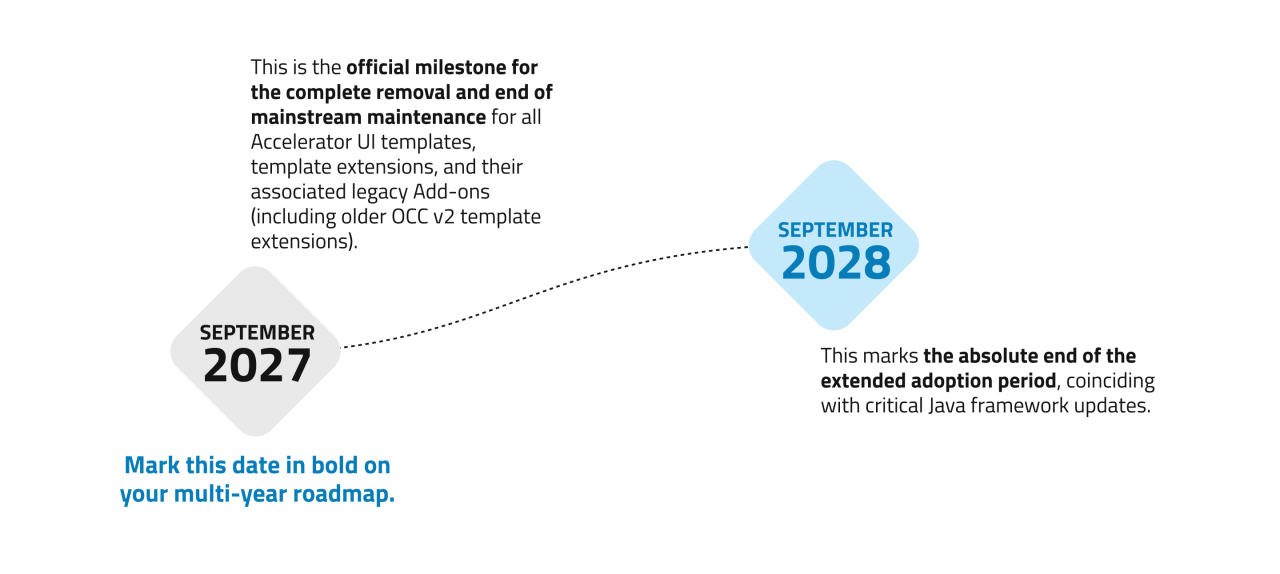
The Immediate Risk: If your team is still running on legacy JSP stacks or relying on old add-on architectures past these milestones, you aren’t just missing out on modern features, you are isolating your storefront from vital platform updates, security patches, and structural enhancements. The clock is officially ticking.
Our POV: The Silver Lining
The sunset of the Accelerator is not a crisis; it is the ultimate forcing function to modernize. The future of enterprise commerce belongs to a completely decoupled, API-driven architecture. Moving your frontend presentation to SAP Composable Storefront (Spartacus), or modern headless alternatives built on frameworks like React or Vue, is how you unlock true agility.
But as an architect, I know what keeps you up at night: the sheer weight of the migration. Millions of lines of custom business logic, heavily modified JSPs, and custom properties accumulated over a decade. Traditional migration models tell you this requires an army of developers and often, an 6–8-month timeline.
In Part 2, we’re going to dismantle that assumption entirely.