
 Facebook
 X
X
 Linkedin
Article Index
- From pilots to the real world
- Those who have already made the leap
- What we took away at VASS
- While this was happening in Madrid, Benioff was announcing what's next
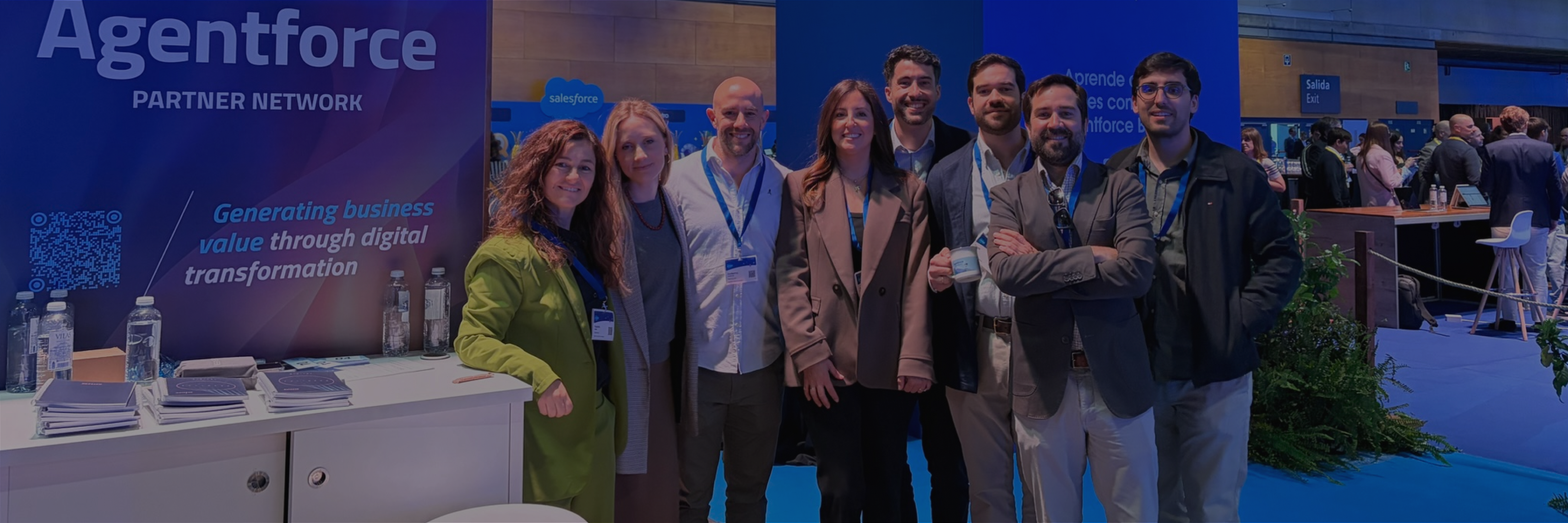
Last Thursday, Pavilion 14 at IFEMA brought together more than 3,500 people to witness something we’ve been talking about for years in PowerPoint presentations: AI agents running in production, in real companies, delivering results measured in euros and time saved. Not demos. Not pilots. Production.
At VASS, we were there. And we left with a conclusion that leaves little room for debate: the agentic enterprise is no longer the future. It is already the present—whether we like it or not.
From pilots to the real world
Salesforce opened with a statistic that deserves a moment of silence: a 2025 MIT study reveals that 95% of AI pilot projects never make it into production. 95%. When you think about it, that’s an enormous amount of energy, budget, and ambition sitting in a SharePoint folder named “PoC_v3_FINAL_final.”
According to Salesforce, the problem is not technological—it’s structural. LLMs alone are not enough for enterprise environments: they lack business context, are not deterministic, and can hallucinate in ways no organization can afford—especially when the agent is interacting with your customers.
The architecture proposed to bridge this gap combines four elements: real-time business data, established enterprise applications, Agentforce’s agent management system, and collaboration channels with Slack at the core. In other words, the agent needs to know where it is, who it’s talking to, and what rules apply—just like any consultant joining a new project.
Those who have already made the leap
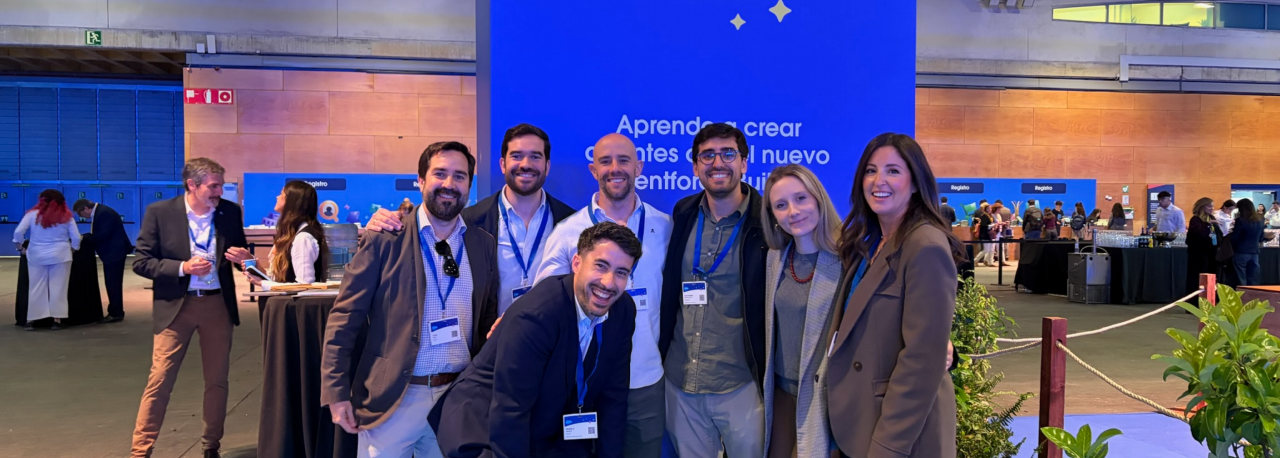
The most interesting part of the day wasn’t the keynote. It was Agentforce City—the exhibition area where companies with agents already in production shared what they were doing and, more importantly, what they had learned the hard way.
Some standout examples:
Iberia introduced SofIA, an agent for People teams that answers questions about any aspect of the company and reduces response times in the Contact Center. Anyone who has worked with Iberia knows this is no small thing: in an organization of that scale, finding the right answer in seconds instead of minutes makes a tangible difference in day-to-day operations.
CaixaBank deployed an agent to support call center employees handling customer inquiries about online loans. The agent doesn’t replace the human—it prepares the ground so that the conversation starts exactly where it should.
Universidad Europea uses Agentforce as a recommendation engine for academic programs. The agent matches prospective student profiles with the full academic offering, pre-qualifies interest, and escalates to a human advisor when it detects a high-value opportunity. In essence, it handles the filtering work that previously consumed hours of a salesperson’s time.
AEDAS Homes perhaps offered the most concrete example: two named agents—Lara for property advisory and Félix for after-sales service. Giving an agent a name is not marketing. It means it has become part of the team.
What we took away at VASS
For us, the Agentforce World Tour 2026 confirmed something we’ve been working on with our clients for some time: an agent without business context is just a chatbot in a suit. Agentic AI only delivers real value when it is connected to the right data, integrated into the processes the company already uses, and aligned with the people who know how to act on the insights it generates.
While this was happening in Madrid, Benioff was announcing what's next
Because this isn’t slowing down. On the same day as the Madrid event, Salesforce introduced something at its TDX developer conference that significantly reshapes the playing field: Headless 360.
The idea is as straightforward as the name suggests: the entire Salesforce platform—CRM, Agentforce, Slack—is exposed as an API, as an MCP tool, or as a command line interface. No graphical interface. No browser. No need to log into Salesforce for Salesforce to work.
Benioff summed it up in one line: “No Browser Required. Our API is the UI.”
In practical terms, this means any external AI agent—Claude, Cursor, Codex—can build, configure, and operate Salesforce directly from code. Flows, objects, integrations: everything becomes accessible through a conversation with an agent, without touching a single setup menu.
Salesforce aims to be the platform where agents run—not the interface users interact with.
For those of us who have been in this ecosystem for a while, the question is no longer whether this will change the way we work. The real question is how fast—and who will be ready.